Braai guide · 7 min read
Which woods, and which to avoid
Some wood makes food taste better. Some makes it taste like a chemical works. A few will make you ill, and two of those are sold as firewood.
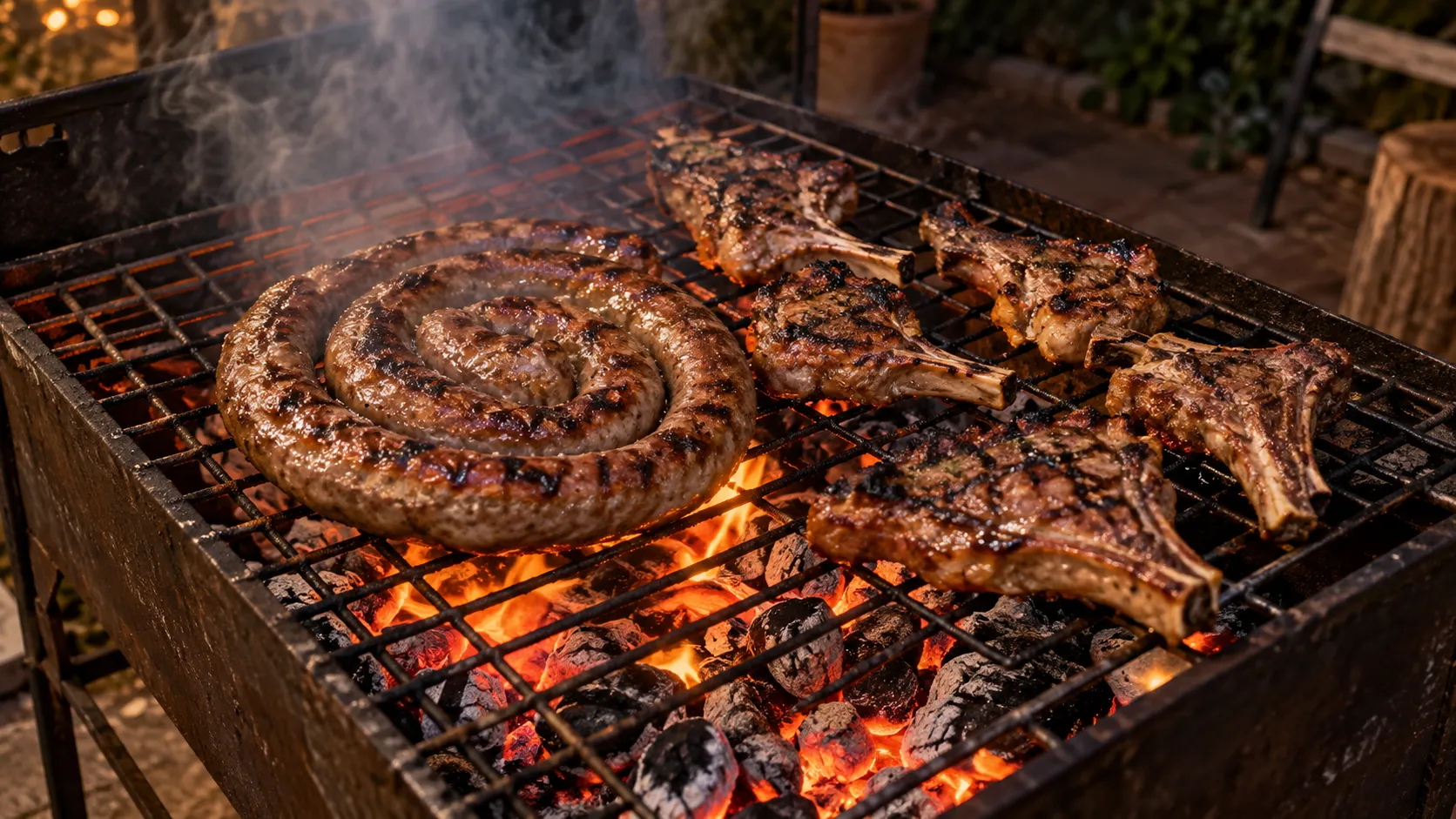
Hardwoods are dense, burn slowly and leave long-lasting coals. Softwoods are resinous, burn fast and leave almost nothing. That single distinction sorts most of the question: braai over hardwood, and do not braai over anything that smells of turpentine when it burns.
The ones worth buying
Rooikrans
The default at the coast, and deservedly. It lights readily for a hardwood, burns hot, leaves a good bed of coals and has a clean, mild smoke that does not fight the meat. It is also an invasive alien, so burning it is doing the fynbos a favour. If you do not know what to buy, buy this.
Kameeldoring (camel thorn)
The long-burning one. Extremely dense, slow to catch, and then it holds heat for hours — this is the wood for a potjie, a leg of lamb, or anything where you want coals still working at ten o'clock. Expensive, and protected in the wild, so buy it only from a supplier who can say where it came from. Dead-wood harvesting is permitted; cutting living camel thorn is not.
Sekelbos (sickle bush)
Another invasive, another good one. Burns hot and fast with a pleasant smoke. Cheaper than kameeldoring and well suited to a quick braai of chops and wors.
Black wattle
Invasive, widely available, inexpensive, and perfectly good. The smoke is slightly sweeter than rooikrans. Burns a bit faster, so expect to feed the fire once.
Vine cuttings and fruit woods
Old vine stumps, apple, pear and peach prunings all give a sweet, light smoke that suits chicken, pork and fish. They burn quickly, so use them alongside a denser wood rather than on their own.
The ones to avoid
Pine, and anything else resinous
Pine, fir and spruce are full of resin. They spit, flare, burn out fast and leave a sooty deposit with a turpentine taste that gets into the food. They are fine for starting a fire and wrong for cooking over.
Eucalyptus, mostly
Gum burns hot and is sometimes sold as braai wood, but the oils give a harsh, medicinal smoke, and it often spits. Some people use well-seasoned gum successfully; green gum is unpleasant. There are better options at the same price.
Oleander
Every part of this plant is poisonous, and the toxins are not destroyed by burning. Smoke from oleander can carry them onto the food and into the lungs of whoever is standing over it. It grows as a hedge all over the country, which is exactly why it ends up on fires by accident. Never burn it, and do not burn garden clippings you cannot identify.
Treated timber
This is the one that actually puts people in hospital. Old pallets, offcut decking, fence posts, scaffold boards and pine poles are very often treated with copper-chrome-arsenate, creosote or similar. Burning them releases arsenic and chromium compounds into the smoke and concentrates them in the ash. It does not smell dangerous.
How to tell: CCA-treated timber is usually a dull green-grey all the way through a cut face, and often has small incision marks in rows along it. Creosote is dark brown, oily and smells of tar. Anything painted, varnished, glued, laminated or suspiciously square is not firewood. If you are not sure where a piece of wood came from, do not cook over it.
Driftwood
Sea-soaked wood carries salt, which releases chlorinated compounds when burned. Pleasant blue flames, bad idea.
Dry matters as much as species
Freshly cut wood is up to half water by weight. That water has to boil off before the wood can burn properly, which it does by stealing heat from your fire and leaving thick white smoke that tastes acrid. Properly seasoned wood has been split and stacked under cover for six to twelve months.
You can tell by hitting two pieces together: seasoned wood gives a sharp crack, green wood a dull thud. Seasoned wood is lighter than it looks, has cracks across the end grain, and the bark comes away easily.
The short version
Buy rooikrans or wattle for most braais, kameeldoring when you want coals that last, and fruit wood to mix in for chicken and fish. Never burn treated timber, oleander or anything you cannot name. Make sure it is dry. That is most of what there is to know, and the rest is preference.